by Manasseh Akpa Damaolu
My participation at the Nigerian Bar Association (NBA) North-Central Security Summit was far more than a speaking engagement, it was a deeply personal and urgent call to action. The journey to Makurdi, Benue State, set the tone. As I passed through the Yelwata community—recently devastated by an attack that claimed over 100 lives, I was confronted with the haunting aftermath: charred homes, empty farmlands, and the unsettling silence of a community in mourning. That moment, raw and unforgettable, sharpened my focus. I wasn’t just attending the summit as a legal professional; I was there as a witness to the human cost of insecurity, driven by a renewed resolve to speak with responsibility, clarity and compassion.

Receiving an award as a panelist presented by the NBA 2nd Vice president – Bolatumi Animashaun Esq with the NBA 3rd Vice President – Zainab Aminu Garba Esq
Insecurity; the consequence of a Broken System
The NBA North-Central Regional Security Summit, an initiative led by Mazi Afam Osigwe, SAN addressed the urgent and multifaceted security challenges facing the region. From herder-farmer conflicts and communal clashes to rampant banditry and kidnappings, these crises have done more than claim lives. They have corroded public trust in the justice system and stifled economic growth. In conflict-affected communities, insecurity doesn’t end with the violence, it lingers. Infrastructure is destroyed, residents are displaced, and commerce grinds to a halt. Government responses typically focus on military intervention, but this approach fails to tackle a deeper issue: the inability of our justice system to deliver timely and effective punishment. A familiar pattern plays out, suspects are arrested, paraded before cameras, arraigned in court, and then… nothing. Cases vanish into the judicial abyss of adjournments, delays, and red tape. The lack of consequences emboldens perpetrators, fueling a vicious cycle of violence and impunity.
The Solution: A Digitized, Responsive Judiciary
The theme of the 2025 NBA North-Central Security Summit Strengthening Security, Rule of Law, and Justice Delivery in North Central Nigeria, captures a foundational truth: without a functional, efficient judiciary, peace and development are impossible. To halt this cycle, we must equip our courts with the tools and technologies needed for efficient, transparent justice. The outdated practice of longhand transcription, a major cause of delays, must be replaced with technologies that reflect the urgency in justice delivery.

Case Study: A fully digitized court at Plateau State Courtesy of PPDC with support
The Public and Private Development Centre (PPDC), with support from the U.S. Department of State’s Bureau of International Narcotics and Law Enforcement Affairs, is helping usher in a new era of justice delivery. We have digitized 24 courts across the FCT, Kaduna, Nasarawa, and Plateau States so far, outfitting them with a comprehensive suite of technological tools designed to transform courtrooms into engines of efficiency.
We have equipped these courts with the following:
- Legal Speech Processors: Using real-time speech-to-text technology, court proceedings are instantly transcribed into searchable digital records, eliminating manual errors and saving hours of administrative labor.
- JudiAI: This intelligent assistant supports judges with case management, legal research, and file organization. It reduces administrative overhead, allowing judges to focus on the substance of the law.
- CCTV, Televisions and Microphones: These systems create indisputable audiovisual records and support virtual hearings, enabling safe and remote participation for vulnerable witnesses and parties unable to travel for physical court attendance.
- Inverter Backup Systems: With consistent power supply, these courts remain fully operational—critical in a country where electricity can’t be taken for granted.
- The transformation has been profound. We’ve seen firsthand how digitization reduces case backlogs, supports judicial transparency, and enhances public confidence. As the saying goes, justice delayed is justice denied. Now, we are proving that justice can be both fair and fast.
- A Case That Speaks Volumes
- One example arising from our intervention in Nasarawa State underscores the real-world impact of this digital transformation. On June 26, 2025, High Court II sitting in Lafia, delivered a final judgment in the case of State v. Timileyin Ajayi, sentencing the defendant to death for the murder of Salome Adaidu (alleged girlfriend). What made headlines wasn’t just the verdict it was the speed. The entire process, from arraignment to judgment, took just six months. In a system where justice often drags on for years, this outcome was remarkable and it was made possible by the court’s newly digitized infrastructure provided by PPDC. For Salome’s family, the swift trial brought an unexpected sense of closure. For the public, it was proof that justice, when properly enabled, will not be elusive.
- The Time to Act Is Now.
- Nigeria stands at a critical crossroads. We can no longer afford to treat justice reform as a secondary concern or view technology as an optional upgrade. Insecurity, impunity, and economic stagnation are symptoms of a justice system that is too slow, too manual, and consequently too archaic to serve a 21st-century society. If we are serious about restoring public trust, attracting investment, and rebuilding conflict-affected communities, the government must make the digitization of our courts a national priority. This means committing resources—not just in pilot programs, but at scale. It means enacting policies that mandate the use of legal technology across all levels of the judiciary.
- The transformation has been profound. We’ve seen firsthand how digitization reduces case backlogs, supports judicial transparency, and enhances public confidence. As the saying goes, justice delayed is justice denied. Now, we are proving that justice can be both fair and fast.
- A Case That Speaks Volumes
- One example arising from our intervention in Nasarawa State underscores the real-world impact of this digital transformation. On June 26, 2025, High Court II sitting in Lafia, delivered a final judgment in the case of State v. Timileyin Ajayi, sentencing the defendant to death for the murder of Salome Adaidu (alleged girlfriend). What made headlines wasn’t just the verdict it was the speed. The entire process, from arraignment to judgment, took just six months. In a system where justice often drags on for years, this outcome was remarkable and it was made possible by the court’s newly digitized infrastructure provided by PPDC. For Salome’s family, the swift trial brought an unexpected sense of closure. For the public, it was proof that justice, when properly enabled, will not be elusive.
- The Time to Act Is Now.
- Nigeria stands at a critical crossroads. We can no longer afford to treat justice reform as a secondary concern or view technology as an optional upgrade. Insecurity, impunity, and economic stagnation are symptoms of a justice system that is too slow, too manual, and consequently too archaic to serve a 21st-century society. If we are serious about restoring public trust, attracting investment, and rebuilding conflict-affected communities, the government must make the digitization of our courts a national priority. This means committing resources—not just in pilot programs, but at scale. It means enacting policies that mandate the use of legal technology across all levels of the judiciary.
- The transformation has been profound. We’ve seen firsthand how digitization reduces case backlogs, supports judicial transparency, and enhances public confidence. As the saying goes, justice delayed is justice denied. Now, we are proving that justice can be both fair and fast.
- A Case That Speaks Volumes
- One example arising from our intervention in Nasarawa State underscores the real-world impact of this digital transformation. On June 26, 2025, High Court II sitting in Lafia, delivered a final judgment in the case of State v. Timileyin Ajayi, sentencing the defendant to death for the murder of Salome Adaidu (alleged girlfriend). What made headlines wasn’t just the verdict it was the speed. The entire process, from arraignment to judgment, took just six months. In a system where justice often drags on for years, this outcome was remarkable and it was made possible by the court’s newly digitized infrastructure provided by PPDC. For Salome’s family, the swift trial brought an unexpected sense of closure. For the public, it was proof that justice, when properly enabled, will not be elusive.
- The Time to Act Is Now.
- Nigeria stands at a critical crossroads. We can no longer afford to treat justice reform as a secondary concern or view technology as an optional upgrade. Insecurity, impunity, and economic stagnation are symptoms of a justice system that is too slow, too manual, and consequently too archaic to serve a 21st-century society. If we are serious about restoring public trust, attracting investment, and rebuilding conflict-affected communities, the government must make the digitization of our courts a national priority. This means committing resources—not just in pilot programs, but at scale. It means enacting policies that mandate the use of legal technology across all levels of the judiciary.
- The transformation has been profound. We’ve seen firsthand how digitization reduces case backlogs, supports judicial transparency, and enhances public confidence. As the saying goes, justice delayed is justice denied. Now, we are proving that justice can be both fair and fast.
- A Case That Speaks Volumes
- One example arising from our intervention in Nasarawa State underscores the real-world impact of this digital transformation. On June 26, 2025, High Court II sitting in Lafia, delivered a final judgment in the case of State v. Timileyin Ajayi, sentencing the defendant to death for the murder of Salome Adaidu (alleged girlfriend). What made headlines wasn’t just the verdict it was the speed. The entire process, from arraignment to judgment, took just six months. In a system where justice often drags on for years, this outcome was remarkable and it was made possible by the court’s newly digitized infrastructure provided by PPDC. For Salome’s family, the swift trial brought an unexpected sense of closure. For the public, it was proof that justice, when properly enabled, will not be elusive.
- The Time to Act Is Now.
- Nigeria stands at a critical crossroads. We can no longer afford to treat justice reform as a secondary concern or view technology as an optional upgrade. Insecurity, impunity, and economic stagnation are symptoms of a justice system that is too slow, too manual, and consequently too archaic to serve a 21st-century society. If we are serious about restoring public trust, attracting investment, and rebuilding conflict-affected communities, the government must make the digitization of our courts a national priority. This means committing resources—not just in pilot programs, but at scale. It means enacting policies that mandate the use of legal technology across all levels of the judiciary.
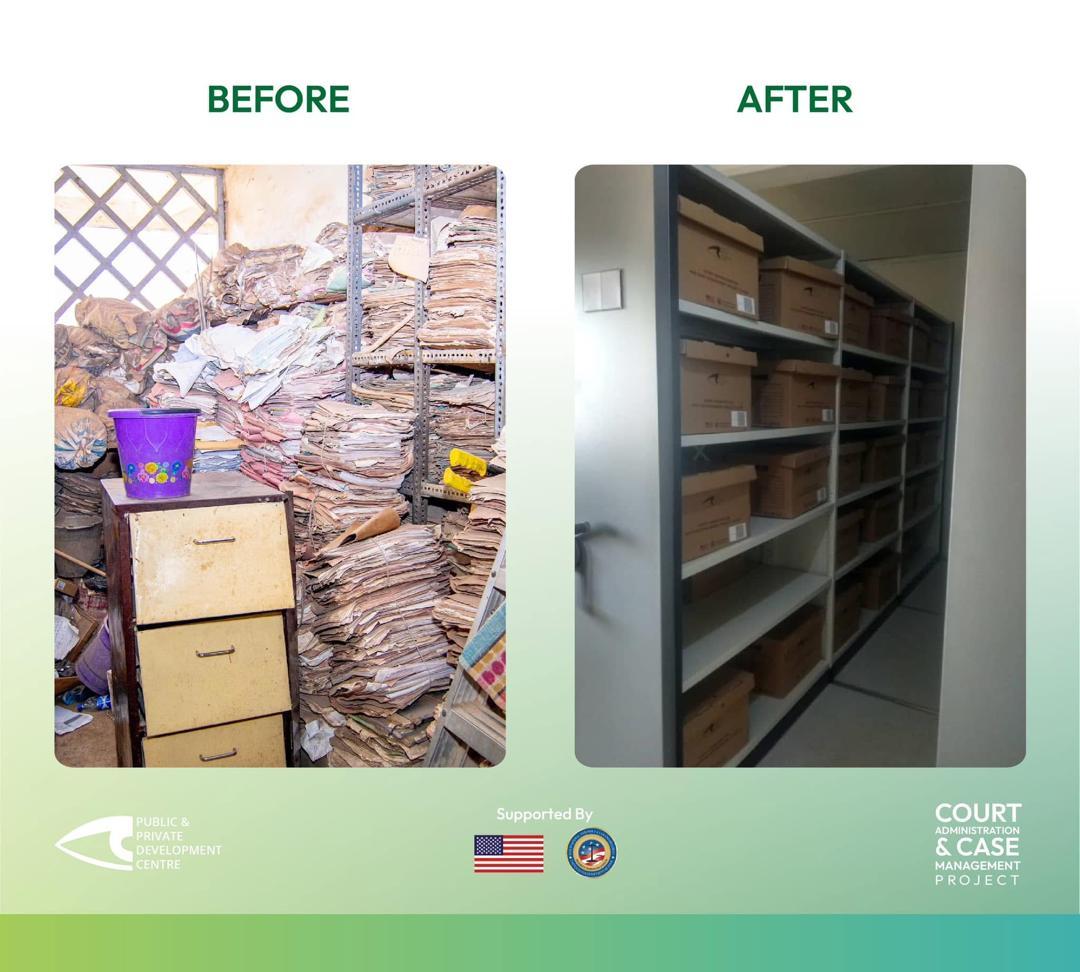
- Modernized Record Centers: A truly digitized justice system is only as functional as its ability to manage, store, and retrieve records seamlessly—and securely. This is where modernized record centers become indispensable. At the heart of our digitization efforts is the development of centralized, cloud-based record centers that house digital case files, judgments, transcripts, and evidence logs. These centers ensure that judicial information is not only preserved for the long term but also accessible in real time by authorized users across jurisdictions.